


Veröffentlicht am 20. Juni 2026 | Aktualisiert am 20. Juni 2026 | 9 Min. Lesezeit
Enterprise Architecture für das PMO und Transformation Office
Was Enterprise Architecture einem Transformation Office bietet: Portfolio-Transparenz, fähigkeitsbasierte Planung, eine sequenzierte Roadmap und nachvollziehbare Entscheidungen über Initiativen hinweg.
Suchen Sie eine Software für Unternehmensarchitektur? Lesen Sie unseren Leitfaden zur Bewertung von EA-Tools und starten Sie das EA-Reifegrad-Assessment.
Kernaussagen
Inhaltsverzeichnis
- Das PMO besitzt das Portfolio, nicht nur die Projekte
- Portfolio-Transparenz: Initiativen gegen Fähigkeiten sehen
- Fähigkeitsbasierte Planung, nicht Projektlisten-Planung
- Eine sequenzierte Roadmap mit Abhängigkeiten im Blick
- Entscheidungsnachverfolgbarkeit über die Transformation hinweg
- Starten Sie bei Ihrer Reife, nicht bei einem Anbieter-Pitch
Das PMO besitzt das Portfolio, nicht nur die Projekte
Ein Transformation Office wird an Ergebnissen über viele Initiativen zugleich gemessen — und genau dort greift eine Projekt-für-Projekt-Sicht zu kurz. Zwei Programme berühren dieselben Systeme, ein drittes setzt eine Fähigkeit voraus, die niemand verantwortet, und die Abhängigkeit zeigt sich erst, wenn etwas ins Rutschen gerät. Das PMO braucht einen Rahmen oberhalb der einzelnen Projekte.
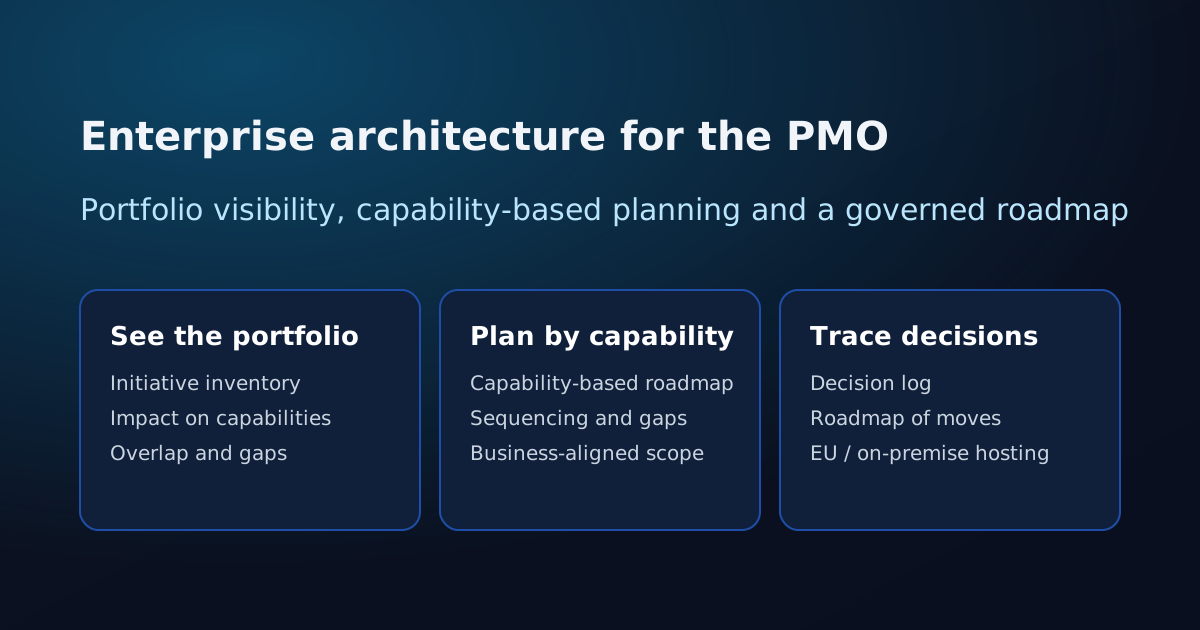
Diese Seite betrachtet Enterprise Architecture durch diese Brille: Transparenz über Portfolio und Initiativen, fähigkeitsbasierte Planung, eine sequenzierte Roadmap und Entscheidungsnachverfolgbarkeit. Sie ist bewusst praktisch und beschränkt jede Aussage zu ArchiLU auf überprüfbare Funktionen.
Portfolio-Transparenz: Initiativen gegen Fähigkeiten sehen
Das Nützlichste, was EA einem PMO gibt, ist ein gemeinsames Rückgrat — eine Business-Capability-Karte —, gegen die jede Initiative aufgetragen werden kann. Plötzlich ist das Portfolio keine flache Liste mehr, sondern ein Bild: in welche Fähigkeiten investiert wird, welche von überlappenden Projekten überfüllt sind und welche strategischen Bereiche gar keine Initiative haben.
In dieser Sicht werden Doppelfinanzierung, verborgene Abhängigkeiten und Abdeckungslücken früh sichtbar, solange sie noch günstig zu beheben sind.
- Initiativen gegen die Fähigkeiten auftragen, die sie verändern
- Überschneidungen, Konkurrenz und Abdeckungslücken erkennen
- Portfolio-Reviews in evidenzbasierte Priorisierung verwandeln
Fähigkeitsbasierte Planung, nicht Projektlisten-Planung
Projektlisten altern schlecht: Reorganisationen verschieben Kästchen, Werkzeuge werden ersetzt, und der Plan vom letzten Jahr passt nicht mehr zur Struktur dieses Jahres. Ein fähigkeitsbasierter Plan ist dauerhafter, weil Fähigkeiten beschreiben, was das Geschäft tut, unabhängig davon, wer es tut oder mit welchem System.
Die Transformation gegen diese stabile Karte zu planen, lässt das PMO die Fragen beantworten, die Sponsoren wirklich stellen — wo investieren wir, in welcher Reihenfolge und was hängt wovon ab —, mit Antworten, die die nächste Reorganisation überstehen. Der unten verlinkte Leitfaden zum Capability Mapping behandelt, wie man die Karte in Ebenen mit klarer Verantwortlichkeit aufbaut.
Enterprise Architecture aus Sicht eines PMO: Transparenz über Portfolio und Initiativen, fähigkeitsbasierte Planung, eine sequenzierte Roadmap und Entscheidungsnachverfolgbarkeit für die Transformation.
Eine sequenzierte Roadmap mit Abhängigkeiten im Blick
Eine Roadmap ist nur nützlich, wenn sie Abhängigkeiten respektiert. Wenn Initiativen, Fähigkeiten und die von ihnen berührten Systeme in einem vernetzten Modell leben, hört die Sequenzierung auf, eine Wand aus Klebezetteln zu sein, und wird belastbar: Sie können zeigen, warum Initiative B auf Initiative A wartet und was eine Verzögerung nachgelagert bewirkt.
Das ist der Unterschied zwischen einer Roadmap, die den Kontakt mit der Realität übersteht, und einer, die jedes Quartal still überarbeitet wird. Der unten verlinkte Roadmap-Leitfaden führt durch Ausgangszustand, Zielzustand, Lücken und Sequenzierung.
Entscheidungsnachverfolgbarkeit über die Transformation hinweg
Transformationsprogramme häufen Entscheidungen an — Umfangsänderungen, Abwägungen, zurückgestellte Arbeit —, und die Kosten, diesen Trail zu verlieren, zeigen sich später als „warum haben wir das entschieden?“ ohne Antwort. Wenn Entscheidungen und Freigaben neben der Roadmap und dem Modell festgehalten werden, reist die Begründung mit der Arbeit mit.
Für ein PMO ist das eine Governance, die sich rechnet: Lenkungsausschüsse sehen das „Warum“ neben dem „Was“, und ein neuer Programmleiter erbt Kontext statt Archäologie. ArchiLU hält die Architektur, die Roadmap und den Entscheidungs-Trail verbunden, sodass dieser Kontext nicht verloren geht.
Starten Sie bei Ihrer Reife, nicht bei einem Anbieter-Pitch
Bevor Sie neue Werkzeuge oder Prozesse aufsetzen, sehen Sie, wo die Praxis tatsächlich steht. Das kostenlose EA-Reifegrad-Assessment von ArchiLU bewertet zehn Dimensionen und liefert in etwa zehn Minuten einen priorisierten Aktionsplan — ein konkreter Weg für ein Transformation Office, die Lücken bei Portfolio-Transparenz, Planung und Nachverfolgbarkeit zu finden, die am meisten zählen, und zu entscheiden, was zuerst zu beheben ist.
Enterprise Architecture aus Sicht eines PMO: Transparenz über Portfolio und Initiativen, fähigkeitsbasierte Planung, eine sequenzierte Roadmap und Entscheidungsnachverfolgbarkeit für die Transformation.
FAQ
Wie hilft Enterprise Architecture einem PMO oder Transformation Office?
Sie gibt dem Portfolio einen gemeinsamen Rahmen. Statt einer Liste von Projekten lässt EA Sie sehen, welche Geschäftsfähigkeiten jede Initiative berührt, wo sich Initiativen überschneiden oder um dieselben Systeme konkurrieren und wo die Roadmap Lücken lässt. Das verwandelt Portfolio-Reviews von Statusberichten in eine Priorisierung mit Evidenz dahinter.
Was ist fähigkeitsbasierte Planung in der Praxis?
Es ist die Planung der Transformation gegen eine stabile Karte dessen, was das Geschäft tut — seine Fähigkeiten —, statt gegen das Organigramm oder die aktuellen Systeme. Weil Fähigkeiten Reorganisationen und Werkzeuge überdauern, zeigt eine fähigkeitsbasierte Roadmap dauerhafter, wo und in welcher Reihenfolge investiert werden soll, als eine Projektliste. Der unten verlinkte Leitfaden zum Capability Mapping erklärt, wie man diese Karte aufbaut.
Ersetzt EA unser Projektmanagement-Werkzeug?
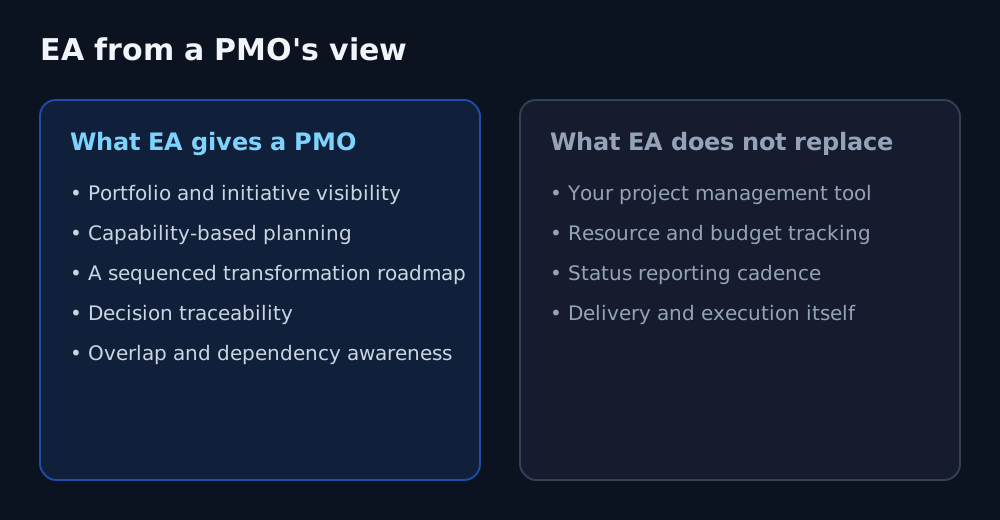
Nein, und sie sollte es nicht versuchen. Ihr PM-Werkzeug verfolgt Aufgaben, Ressourcen, Budgets und Status; EA verfolgt, was das Portfolio verändert und warum. Beide sind komplementär — EA liefert den Kontext zu Fähigkeiten und Roadmap, Ihr PM-Werkzeug steuert die Lieferung. ArchiLU hält die Architektur, die Roadmap und den Entscheidungs-Trail verbunden, sodass das PMO das „Warum“ neben dem „Was“ hat.
Strategische Links
Enterprise-Architecture-Plattformen vergleichen
Verwandte Artikel
Coûts IT et risque fournisseur : une seule carte pour le budget et DORA
Coûts et risque tiers IT vivent d'habitude dans des tableurs séparés. Relier applications, fournisseurs et coûts dans un seul modèle révèle d'un coup concentration, exposition de licences et candidats à la rationalisation — et produit la preuve qu'attendent les revues pensées pour DORA.
NIS2 et architecture d'entreprise : cartographier les systèmes et dépendances que touche la gestion des risques
NIS2 élargit les entités couvertes et relève le niveau attendu en gestion du risque cyber, sécurité de la chaîne d'approvisionnement et traitement des incidents. Chacune de ces attentes repose sur une question préalable : connaissez-vous réellement vos systèmes et la façon dont ils dépendent les uns des autres ? Une cartographie EA est l'endroit naturel pour tenir cela — honnêtement, comme preuve, pas comme un badge de conformité.
CSSF et architecture d'entreprise : une seule carte pour la documentation IT, sous-traitance et résilience
Banques, PSF, entreprises d'investissement et acteurs de fonds supervisés par la CSSF portent des attentes récurrentes de documentation autour de l'IT, de la sous-traitance et de la résilience opérationnelle. Chacune repose sur une question préalable : savez-vous vraiment montrer vos capacités, applications, flux de données et les tiers derrière eux ? Un référentiel EA est l'endroit naturel pour tenir cela — honnêtement, comme preuve, pas comme un badge de conformité.