

Veröffentlicht am 20. Juni 2026 | Aktualisiert am 20. Juni 2026 | 10 Min. Lesezeit
Enterprise Architecture für mittelständische Unternehmen und ETIs
EA auf den Mittelstand skaliert: eine schlankere Praxis, schneller Wert, EU-Souveränität — plus eine ehrliche Anmerkung dazu, wann eine schwerere Enterprise-Suite besser passt.
Suchen Sie eine Software für Unternehmensarchitektur? Lesen Sie unseren Leitfaden zur Bewertung von EA-Tools und starten Sie das EA-Reifegrad-Assessment.
Kernaussagen
Inhaltsverzeichnis
- Der Mittelstand hat dieselben Probleme, auf einer anderen Skala
- Eine schlankere Praxis, keine kleinere Kopie der Enterprise-EA
- Pro-Platz-Lizenzierung bestraft die Mitwirkung
- Schnelle Time-to-Value zählt mehr ohne ein eigenes Team
- Unbegrenzte Nutzer, EU-Hosting und On-Premise
- Wann eine schwerere Enterprise-Suite doch besser passt
Der Mittelstand hat dieselben Probleme, auf einer anderen Skala
Mittelständische Unternehmen und ETIs — groß genug, um echte Komplexität zu haben, klein genug, um keine eigene EA-Abteilung zu besitzen — sitzen in einer unbequemen Lücke. Sie tragen doppelte Anwendungen, brüchige Integrationen und Transformationsentscheidungen, die eine Karte verdienen, aber sie haben selten das Budget oder die Personalstärke, um die herum Enterprise-Architecture-Werkzeuge entworfen wurden.
Die gute Nachricht ist, dass die Praxis sauber nach unten skaliert. Sie brauchen kein fünfzigköpfiges Architekturteam, um Wert zu erzielen; Sie brauchen ein fokussiertes Modell, ein vorhersehbares Werkzeug und einen Weg, Wert schnell zu beweisen. Auf dieser Seite geht es darum, EA auf Mittelstandsskala zu betreiben, ehrlich — einschließlich, wann eine schwerere Suite die bessere Wahl ist.
Eine schlankere Praxis, keine kleinere Kopie der Enterprise-EA
Der Fehler ist, das Architekturprogramm einer globalen Bank in einem Zehntel der Größe nachzuahmen. Behalten Sie stattdessen nur das, was sich rechnet: eine Fähigkeitskarte erster Ebene, ein Anwendungsinventar und die Verbindung dazwischen, plus schlanke Governance für bedeutende Änderungen.
Dieser minimale Kern beantwortet bereits die Fragen, die die Führung stellt — was unterstützt diese Fähigkeit, was würde eine Änderung betreffen, wo gibt es Doppelungen — ohne ein mehrjähriges Rollout. Sie können später Daten-, Technologie- und Roadmap-Sichten vertiefen, wenn die Praxis Vertrauen gewinnt.
Pro-Platz-Lizenzierung bestraft die Mitwirkung
Das Lizenzmodell ist oft der Punkt, an dem Mittelstands-EA ins Stocken gerät. Mehrere etablierte Suiten rechnen pro Platz ab, was bedeutet, dass die Kosten steigen, sobald Sie die Geschäftsstakeholder einladen, die das Modell nützlich machen — genau der falsche Anreiz.
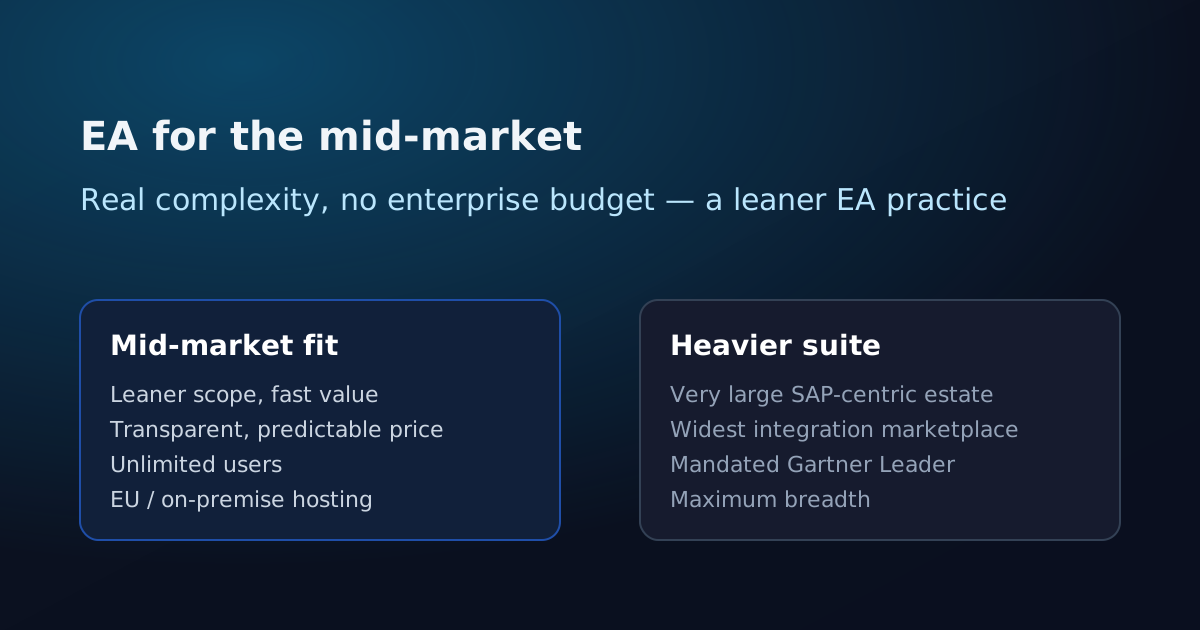
ArchiLU bietet unbegrenzte Nutzer, sodass das Einladen weiterer Mitwirkender die Lizenzposition nicht verändert. Ein mittelständisches Team kann jeden relevanten Stakeholder einbinden, ohne dass Platzgebühren die breite Akzeptanz ausbremsen.
Wie mittelständische Unternehmen und ETIs Enterprise Architecture ohne Konzern-Budget betreiben: schlankerer Umfang, schnelle Time-to-Value, unbegrenzte Nutzer und EU-Hosting.
Schnelle Time-to-Value zählt mehr ohne ein eigenes Team
Wenn dieselben Leute Architektur, Projekte und Betrieb führen, wird ein Werkzeug, das Monate zur Konfiguration braucht, nie übernommen. Mittelstands-EA lebt oder stirbt mit der Time-to-Value: wie schnell Sie eine nutzbare Fähigkeitskarte und ein Portfolio aufstellen und eine Entscheidung zeigen können, die sie verbessert haben.
Bevorzugen Sie ein fokussiertes Modell, das Sie schnell befüllen können, gegenüber einem tiefen Metamodell, das Analysten zum Steuern braucht. Das Ziel ist ein gepflegtes, vertrauenswürdiges Bild in Wochen, nicht ein perfektes in Jahren.
Unbegrenzte Nutzer, EU-Hosting und On-Premise
Mittelstands-Käufer schätzen meist die Kontrolle darüber, wo ihre Daten liegen, und ein Modell, das die breite Mitwirkung nicht bestraft. ArchiLU adressiert beides mit unbegrenzten Nutzern und EU- oder On-Premise-Hosting unter Ihrer Kontrolle — relevant für Organisationen in regulierten oder datensensiblen Branchen, die Residenz-Entscheidungen nicht aufschieben können.
Sie können die Wirtschaftlichkeit mit unserem EA-TCO-Rechner auf die Probe stellen, der es Ihnen erlaubt, Einrichtung, Abonnement und internen Aufwand zu modellieren, statt einer Folie zu vertrauen. Für einen breiteren Blick auf die Kategorie rahmt unser Leitfaden zur Enterprise-Architecture-Software, wo ein Werkzeug wie ArchiLU passt.
Wann eine schwerere Enterprise-Suite doch besser passt
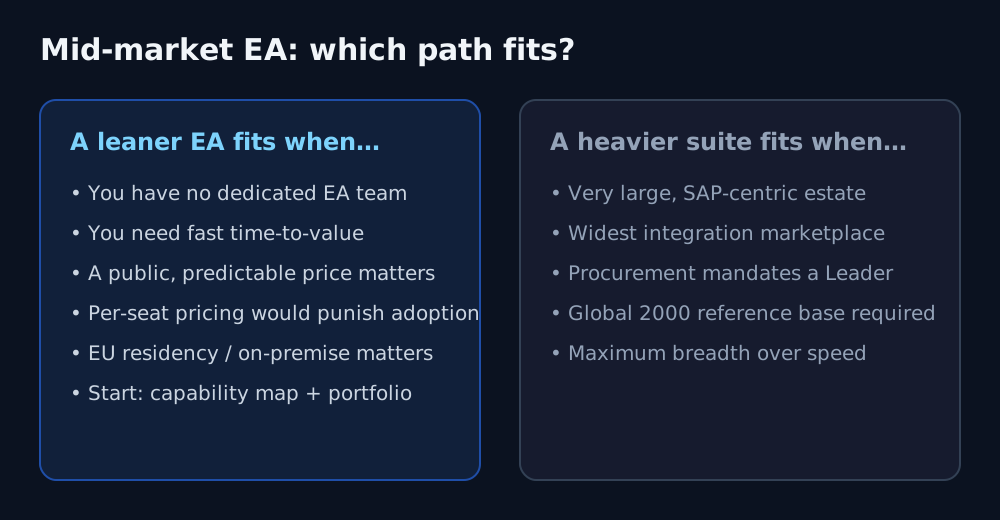
Ehrlichkeit schafft Vertrauen, also sagen wir es klar. Wenn Sie eine sehr große, SAP-zentrierte Landschaft betreiben, den breitesten Integrations-Marktplatz brauchen oder Ihr Einkauf einen langjährigen Gartner-Leader mit einer Global-2000-Referenzbasis vorschreibt, sind die Breite und Skalierung einer schwereren Suite echte Vorteile, die wir nicht wegreden werden.
ArchiLU passt fokussiert zum Mittelstand: Es tauscht maximale Breite gegen schnelle Time-to-Value, unbegrenzte Nutzer und EU-Souveränität. Wenn dieses Profil zu Ihrem Kontext passt, fragen Sie eine Demo an — und entscheiden Sie anhand Ihrer Zahlen, nicht der Folien eines Anbieters.
Wie mittelständische Unternehmen und ETIs Enterprise Architecture ohne Konzern-Budget betreiben: schlankerer Umfang, schnelle Time-to-Value, unbegrenzte Nutzer und EU-Hosting.
FAQ
Ist Enterprise Architecture nur für Großunternehmen?
Nein. Der Begriff sagt „Enterprise“, aber die Praxis skaliert nach unten. Ein mittelständisches Unternehmen oder eine ETI hat ebenfalls doppelte Anwendungen, wuchernde Integrationen und Transformationsentscheidungen zu treffen. Was sich ändert, sind Umfang und Werkzeuge: eine schlankere Fähigkeitskarte, ein fokussiertes Anwendungsportfolio und schlanke Governance liefern den Großteil des Werts ohne ein Programm oder Budget in Konzerngröße.
Kann ein mittelständisches Unternehmen EA mit einem kleinen Team betreiben?
Ja. Das Nutzermodell ist hier entscheidender als die Teamgröße: Suiten, die pro Platz abrechnen, bestrafen die breite Mitwirkung, die ein Mittelstandsteam braucht. ArchiLU bietet unbegrenzte Nutzer, sodass jeder Geschäftsstakeholder ohne Platzgebühr beitragen kann, und ein fokussiertes Modell, das ein kleines Team schnell befüllen kann. Sie können den Aufwand mit unserem EA-TCO-Rechner modellieren, bevor Sie sich festlegen.
Wann braucht ein mittelständisches Unternehmen doch eine schwerere Enterprise-Suite?
Ehrlich gesagt, manchmal ja. Wenn Sie einen sehr großen, SAP-zentrierten Bestand betreiben, den breitesten Marktplatz für Drittanbieter-Integrationen brauchen oder Ihr Einkauf einen langjährigen Gartner-Leader mit einer Global-2000-Referenzbasis vorschreibt, ist die Skalierung einer schwereren Suite ein echter Vorteil. ArchiLU passt am stärksten, wenn Time-to-Value, schnelle Akzeptanz und EU-Souveränität wichtiger sind als maximale Breite.
Strategische Links
Enterprise-Architecture-Plattformen vergleichen
Verwandte Artikel
Coûts IT et risque fournisseur : une seule carte pour le budget et DORA
Coûts et risque tiers IT vivent d'habitude dans des tableurs séparés. Relier applications, fournisseurs et coûts dans un seul modèle révèle d'un coup concentration, exposition de licences et candidats à la rationalisation — et produit la preuve qu'attendent les revues pensées pour DORA.
NIS2 et architecture d'entreprise : cartographier les systèmes et dépendances que touche la gestion des risques
NIS2 élargit les entités couvertes et relève le niveau attendu en gestion du risque cyber, sécurité de la chaîne d'approvisionnement et traitement des incidents. Chacune de ces attentes repose sur une question préalable : connaissez-vous réellement vos systèmes et la façon dont ils dépendent les uns des autres ? Une cartographie EA est l'endroit naturel pour tenir cela — honnêtement, comme preuve, pas comme un badge de conformité.
CSSF et architecture d'entreprise : une seule carte pour la documentation IT, sous-traitance et résilience
Banques, PSF, entreprises d'investissement et acteurs de fonds supervisés par la CSSF portent des attentes récurrentes de documentation autour de l'IT, de la sous-traitance et de la résilience opérationnelle. Chacune repose sur une question préalable : savez-vous vraiment montrer vos capacités, applications, flux de données et les tiers derrière eux ? Un référentiel EA est l'endroit naturel pour tenir cela — honnêtement, comme preuve, pas comme un badge de conformité.