

Veröffentlicht am 20. Juni 2026 | Aktualisiert am 20. Juni 2026 | 9 Min. Lesezeit
Enterprise Architecture für CISOs und Sicherheitsverantwortliche
Was Enterprise Architecture einem Sicherheitsverantwortlichen bietet: Transparenz über den Bestand, Mapping der ICT-Abhängigkeiten, Dokumentationsnachweise für DORA/NIS2, einen Audit-Trail und EU-Residenz.
Suchen Sie eine Software für Unternehmensarchitektur? Lesen Sie unseren Leitfaden zur Bewertung von EA-Tools und starten Sie das EA-Reifegrad-Assessment.
Kernaussagen
Inhaltsverzeichnis
- Der CISO kann nicht absichern, was die Organisation nicht sieht
- Transparenz: der Anwendungsbestand und seine ICT-Abhängigkeiten
- DORA und NIS2: Dokumentation, keine Konformitätszusage
- Governance und ein Audit-Trail an einem Ort
- Wo das Repository liegt, ist eine Sicherheitsentscheidung
- Starten Sie bei Ihrer Reife, nicht bei einem Anbieter-Pitch
Der CISO kann nicht absichern, was die Organisation nicht sieht
Für einen Sicherheitsverantwortlichen ist Enterprise Architecture keine Modellierungsübung — sie ist die Karte, die Sie vor jeder bedeutsamen Risikoentscheidung brauchen. Welche Systeme stützen einen kritischen Dienst? Wovon hängen sie ab? Was passiert mit diesem Dienst, wenn ein Lieferant oder eine Komponente ausfällt? Ohne eine aktuelle Antwort sind Segmentierung, Resilienz und Drittanbieterrisiko reines Raten.
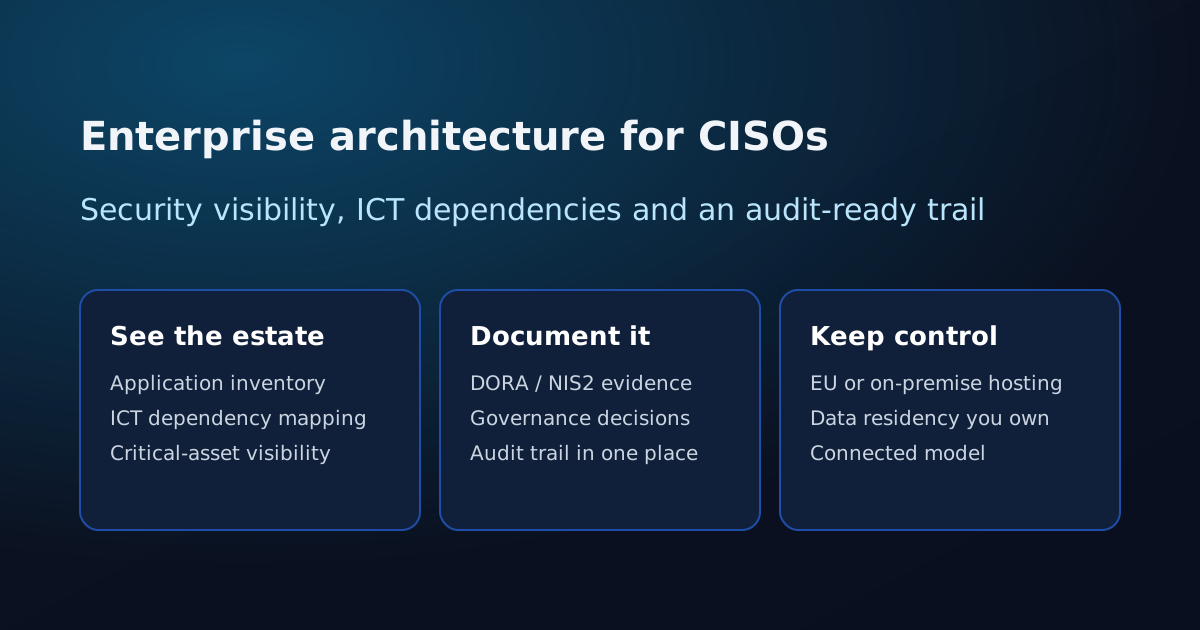
Diese Seite betrachtet EA durch eine Sicherheitsbrille: Transparenz über Bestand und Abhängigkeiten, DORA/NIS2-Dokumentation, Governance und Audit sowie EU-Datenresidenz. Sie ist bewusst ehrlich — Aussagen zu ArchiLU beschränken sich auf überprüfbare Funktionen, und EA wird als Hilfe für Dokumentation und Transparenz dargestellt, nicht als Konformitätsgarantie.
Transparenz: der Anwendungsbestand und seine ICT-Abhängigkeiten
Das Risiko lebt in den Verbindungen. Ein Anwendungsregister sagt Ihnen, was existiert; eine ICT-Abhängigkeitskarte sagt Ihnen, wie diese Systeme einander stützen und welche Geschäftsdienste sie tragen. Zusammen lassen sie Sie über den Wirkungsradius, einzelne Ausfallpunkte und die Systeme nachdenken, die die größte Aufmerksamkeit verdienen.
Wenn dieses Bild in einem vernetzten Modell statt in verstreuten Diagrammen liegt, wird eine Wirkungsanalyse — „wenn dieses System kompromittiert oder abgeschaltet wird, was ist betroffen?“ — zu einer Abfrage statt zu einer Untersuchung.
- Ein aktuelles Inventar von Anwendungen und Assets pflegen
- ICT-Abhängigkeiten und die von ihnen gestützten Dienste abbilden
- Über Wirkungsradius und einzelne Ausfallpunkte nachdenken
DORA und NIS2: Dokumentation, keine Konformitätszusage
Regime wie DORA und NIS2 erwarten, dass Organisationen ihre kritischen Systeme, ihre Abhängigkeiten und ihre Drittanbieter-Exposition kennen und dieses Wissen belegen können. Das ist im Kern ein Problem der Architektur-Dokumentation, bevor es ein Werkzeugproblem ist.
ArchiLU hilft Ihnen, diese Dokumentation aktuell zu halten — ein Anwendungsregister, Abhängigkeitskarten und eine Aufzeichnung der Governance-Entscheidungen —, sodass Nachweise belastbar und aktuell sind. Es zertifiziert keine Konformität und ersetzt weder Ihre Bewertung noch Ihre Kontrollen noch Ihre Rechtsberatung. Die unten verlinkte Checkliste rahmt, was zu dokumentieren ist; die Verantwortung für die Konformität bleibt bei Ihnen.
Enterprise Architecture aus Sicht eines CISO: Transparenz über den Bestand, Mapping der ICT-Abhängigkeiten, DORA/NIS2-Dokumentation, ein Audit-Trail und EU-Datenresidenz unter Ihrer Kontrolle.
Governance und ein Audit-Trail an einem Ort
Auditoren und Aufsichtsbehörden fragen nicht nur „wie sieht Ihre Architektur aus“, sondern „wer hat dies entschieden, wann und gegen welche Richtlinie“. Wenn Architekturentscheidungen, Prinzipien und Freigaben neben dem Modell festgehalten werden, antworten Sie mit einem Trail, statt ihn aus E-Mail-Verläufen zu rekonstruieren.
Für einen CISO zählt das doppelt: Es verkürzt Audits, und es bedeutet, dass Sicherheitsausnahmen und Risikoakzeptanzen dort festgehalten werden, wo die betroffenen Systeme leben — nicht verloren in einem Ticketsystem, das niemand wieder aufruft.
Wo das Repository liegt, ist eine Sicherheitsentscheidung
Ihr Architektur-Repository ist ein hochwertiges Ziel: Es beschreibt Ihre sensibelsten Systeme und ihre schwächsten Stellen. Die Hosting-Frage ist also nicht nebensächlich. ArchiLU bietet EU- oder On-Premise-Hosting unter Ihrer Kontrolle, das Bedenken zu Datenresidenz und Souveränität direkt beantwortet und diese sensible Karte unter Ihrer Governance hält.
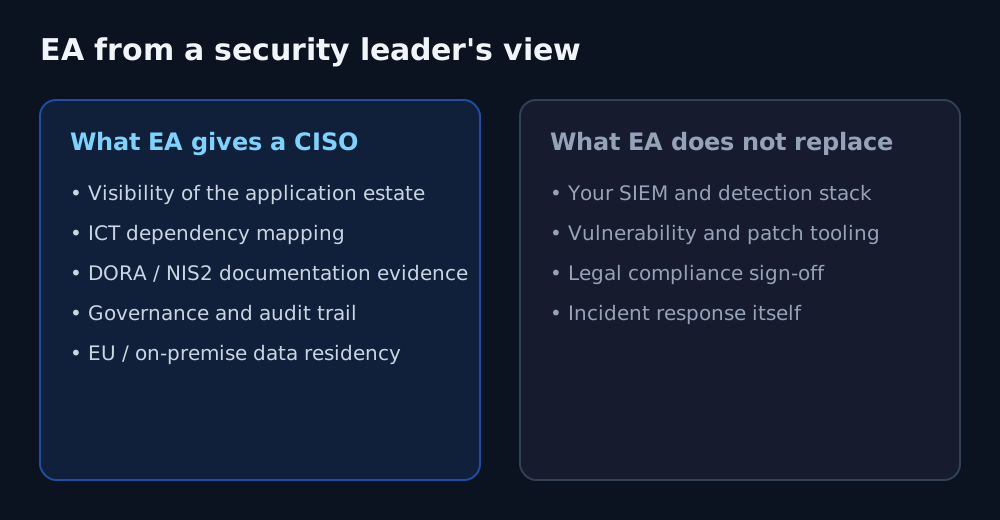
Seien Sie sich jedoch über den Umfang im Klaren: EA liefert Transparenz, Abhängigkeiten, Dokumentation und Governance. Sie ersetzt weder Ihren Detection-Stack noch Ihre Schwachstellen-Werkzeuge noch Ihre Incident Response — sie macht diese Funktionen besser informiert.
Starten Sie bei Ihrer Reife, nicht bei einem Anbieter-Pitch
Bevor Sie investieren, sehen Sie, wo Ihre Praxis tatsächlich steht. Das kostenlose EA-Reifegrad-Assessment von ArchiLU bewertet zehn Dimensionen und liefert in etwa zehn Minuten einen priorisierten Aktionsplan — ein konkreter Weg für einen Sicherheitsverantwortlichen, die Lücken bei Transparenz, Abhängigkeiten und Governance zu finden, die am meisten zählen, und zu entscheiden, was zuerst zu beheben ist.
Enterprise Architecture aus Sicht eines CISO: Transparenz über den Bestand, Mapping der ICT-Abhängigkeiten, DORA/NIS2-Dokumentation, ein Audit-Trail und EU-Datenresidenz unter Ihrer Kontrolle.
FAQ
Warum sollte sich ein CISO für Enterprise Architecture interessieren?
Weil man nicht absichern kann, was man nicht sieht. Enterprise Architecture liefert einem Sicherheitsverantwortlichen eine aktuelle Karte des Anwendungsbestands und seiner ICT-Abhängigkeiten, sodass Sie wissen, welche Systeme kritische Dienste stützen, womit sie verbunden sind und was ausfällt, wenn eines davon versagt. Diese Transparenz ist das Fundament unter Risikobewertung, Segmentierungsentscheidungen und Resilienzplanung.
Macht uns eine EA-Plattform DORA- oder NIS2-konform?
Nein, und das werden wir auch nicht behaupten. Rechtliche Konformität wird durch Ihre Prozesse, Kontrollen und eine Bewertung bestimmt, nicht durch ein Werkzeug. Was ArchiLU tut, ist Ihnen zu helfen, die Dokumentation zu erstellen und zu pflegen, die diese Regime erwarten — ein Anwendungsregister, ICT-Abhängigkeitskarten und einen Governance-Trail —, sodass die Nachweise aktuell und belastbar sind, statt vor jedem Audit aus Tabellen neu aufgebaut zu werden.
Warum spielt EU- oder On-Premise-Hosting für einen Sicherheitsverantwortlichen eine Rolle?
Weil Ihr Architektur-Repository Ihre sensibelsten Systeme und deren Schwachstellen beschreibt — wo es liegt, ist daher selbst eine Risikoentscheidung. ArchiLU bietet EU- oder On-Premise-Hosting unter Ihrer Kontrolle, das Fragen zu Datenresidenz und Souveränität von Risiko, Recht und Einkauf direkt beantwortet, statt sie der Standardregion einer Drittanbieter-Cloud zu überlassen.
Strategische Links
Enterprise-Architecture-Plattformen vergleichen
Verwandte Artikel
Coûts IT et risque fournisseur : une seule carte pour le budget et DORA
Coûts et risque tiers IT vivent d'habitude dans des tableurs séparés. Relier applications, fournisseurs et coûts dans un seul modèle révèle d'un coup concentration, exposition de licences et candidats à la rationalisation — et produit la preuve qu'attendent les revues pensées pour DORA.
NIS2 et architecture d'entreprise : cartographier les systèmes et dépendances que touche la gestion des risques
NIS2 élargit les entités couvertes et relève le niveau attendu en gestion du risque cyber, sécurité de la chaîne d'approvisionnement et traitement des incidents. Chacune de ces attentes repose sur une question préalable : connaissez-vous réellement vos systèmes et la façon dont ils dépendent les uns des autres ? Une cartographie EA est l'endroit naturel pour tenir cela — honnêtement, comme preuve, pas comme un badge de conformité.
CSSF et architecture d'entreprise : une seule carte pour la documentation IT, sous-traitance et résilience
Banques, PSF, entreprises d'investissement et acteurs de fonds supervisés par la CSSF portent des attentes récurrentes de documentation autour de l'IT, de la sous-traitance et de la résilience opérationnelle. Chacune repose sur une question préalable : savez-vous vraiment montrer vos capacités, applications, flux de données et les tiers derrière eux ? Un référentiel EA est l'endroit naturel pour tenir cela — honnêtement, comme preuve, pas comme un badge de conformité.