

Veröffentlicht am 20. Juni 2026 | Aktualisiert am 20. Juni 2026 | 9 Min. Lesezeit
Enterprise Architecture für CIOs: Kosten, Risiko und Kontrolle
Was Enterprise Architecture für einen CIO leisten sollte, der Budget und Risiko trägt: Kostenkontrolle, verteidigbare Governance, EU-Souveränität und Time-to-Value.
Suchen Sie eine Software für Unternehmensarchitektur? Lesen Sie unseren Leitfaden zur Bewertung von EA-Tools und starten Sie das EA-Reifegrad-Assessment.
Kernaussagen
Inhaltsverzeichnis
- Der CIO trägt Budget und Risiko
- Kostenkontrolle: den Bestand in ein verteidigbares Budget verwandeln
- Unbegrenzte Nutzer, die der CFO budgetieren kann
- EU-Souveränität und auditbereite Governance
- Time-to-Value: Ergebnisse dieses Quartal, nicht nächstes Jahr
- Aus Ihrer Reife entscheiden, nicht aus einem Anbieterpitch
Der CIO trägt Budget und Risiko
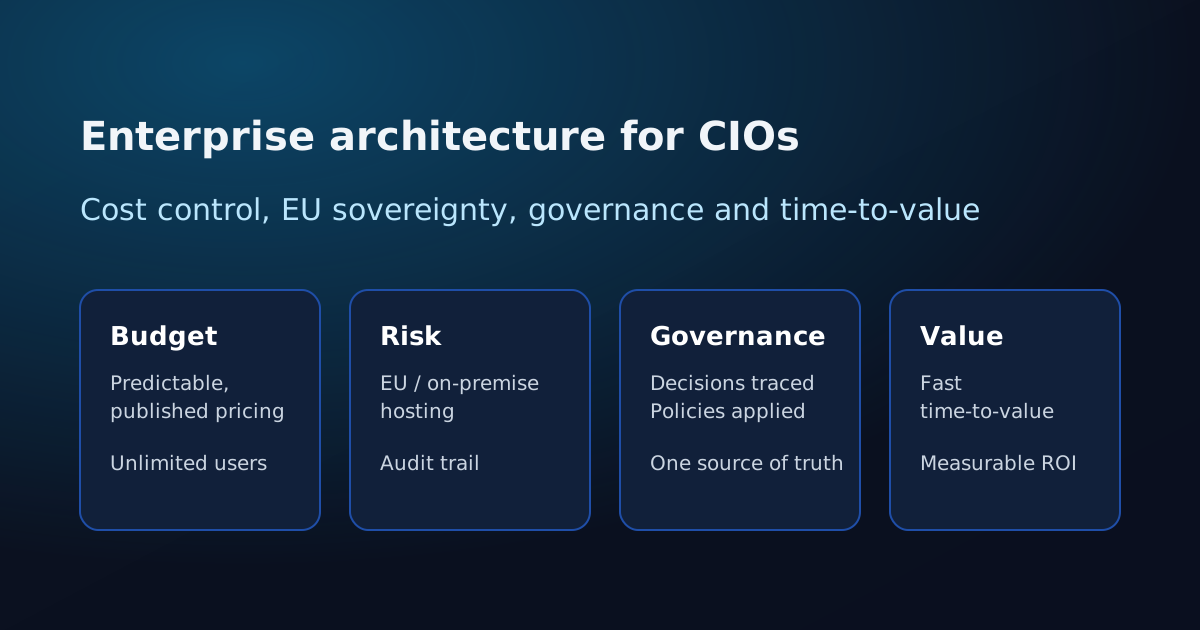
Für einen CIO ist Enterprise Architecture keine Modellierungsübung — sie ist die Art, wie Sie über einen wachsenden Anwendungsbestand die Kontrolle behalten, während die Finanzabteilung Einsparungen verlangt und Regulierer Belege fordern. Die Frage lautet selten „ist das Diagramm korrekt?“ und fast immer „kann ich diese Ausgabe verteidigen, und kann ich nachweisen, dass dies gesteuert ist?“
Diese Seite betrachtet EA durch diese Brille: Kostenkontrolle, breite Akzeptanz, EU-Souveränität, Governance und Audit sowie Time-to-Value. Sie ist bewusst praktisch und beschränkt jede Archilu-Behauptung auf Funktionen, die Sie überprüfen können.
Kostenkontrolle: den Bestand in ein verteidigbares Budget verwandeln
Der Großteil der IT-Kosten versteckt sich im Anwendungsportfolio: doppelte Werkzeuge für dieselbe Aufgabe, geringwertige Systeme, die niemand ausgemustert hat, und alternde Technologie, die still Risiko und Betriebskosten erhöht. Application Portfolio Management macht das sichtbar, was die Voraussetzung ist, es zu senken.
Ein strukturiertes Portfolio erlaubt es, Anwendungen nach Kosten, Geschäftswert und Risiko zu ordnen und dann Ausmusterungen und Konsolidierungen mit Zahlen dahinter zu planen. Das ist der Unterschied zwischen einer willkürlichen Budgetkürzung und einem verteidigbaren Rationalisierungsplan.
- Doppelte und geringwertige Anwendungen aufdecken
- Nach Kosten, Wert und Risiko ordnen, um Ausmusterungen zu priorisieren
- Meinungsbasierte Kürzungen durch Belege ersetzen
Unbegrenzte Nutzer, die der CFO budgetieren kann
Eine EA-Lizenzierung pro Platz macht die Akzeptanz zu einem Kostenproblem: Jeder Verantwortliche, Risk Officer oder Architekt, den Sie hinzufügen, erhöht die Rechnung — was genau die breite Mitwirkung entmutigt, die ein Modell nützlich hält. Archilu umfasst unbegrenzte Nutzer in jedem Plan, sodass das Einladen weiterer Mitwirkender die Kosten nicht aufbläht.
Das ist fürs Budgetieren relevant: Es beseitigt Überraschungen pro Platz, wenn die Akzeptanz wächst, und erlaubt es, die Total Cost of Ownership ehrlich zu modellieren. Der unten verlinkte TCO-Rechner ist genau für dieses Gespräch gebaut.
Enterprise Architecture aus CIO-Sicht: IT-Kosten kontrollieren, Governance nachweisen, Daten in der EU halten und schnell Wert erreichen — mit unbegrenzten Nutzern und EU-Souveränität.
EU-Souveränität und auditbereite Governance
Für regulierte und souveränitätsempfindliche Organisationen ist die Frage, wo die Daten liegen, eine Frage auf Vorstandsebene. Archilu bietet EU- oder On-Premise-Hosting unter Ihrer Kontrolle, was Datenresidenzbedenken aus Risiko, Recht und Einkauf direkt beantwortet.
Governance ist die andere Hälfte. Wenn Architekturentscheidungen, Richtlinien und Freigaben an einem Ort festgehalten werden, können Sie einem Auditor mit einer Spur antworten, statt sie aus E-Mails zu rekonstruieren. EA hört auf, Dokumentation zu sein, und wird zum Beleg.
Time-to-Value: Ergebnisse dieses Quartal, nicht nächstes Jahr
Ein CIO wird an Ergebnissen gemessen, nicht daran, wie ausgefeilt das Metamodell ist. Das Risiko bei schweren EA-Suiten ist eine lange Implementierung, bevor irgendjemand Wert sieht. Archilu ist so gestaltet, dass ein Team schnell eine nutzbare Fähigkeitskarte und ein Anwendungsportfolio erstellen kann, ohne zuvor eine Modellierungspraxis aufzubauen.
Eine schnelle Time-to-Value entschärft auch die Entscheidung: Sie erfahren in Wochen, ob der Ansatz zu Ihrer Organisation passt, nicht nach einer einjährigen Einführung.
Aus Ihrer Reife entscheiden, nicht aus einem Anbieterpitch
Bevor Sie Budget binden, beginnen Sie dort, wo Ihre Praxis tatsächlich steht. Archilus kostenlose EA-Reifebewertung bewertet zehn Dimensionen und liefert in etwa zehn Minuten einen priorisierten Aktionsplan — eine konkrete Art zu sehen, wo Kosten-, Risiko- und Governance-Lücken wirklich liegen und was zuerst zu beheben ist.
Enterprise Architecture aus CIO-Sicht: IT-Kosten kontrollieren, Governance nachweisen, Daten in der EU halten und schnell Wert erreichen — mit unbegrenzten Nutzern und EU-Souveränität.
FAQ
Warum sollte sich ein CIO für Enterprise Architecture interessieren?
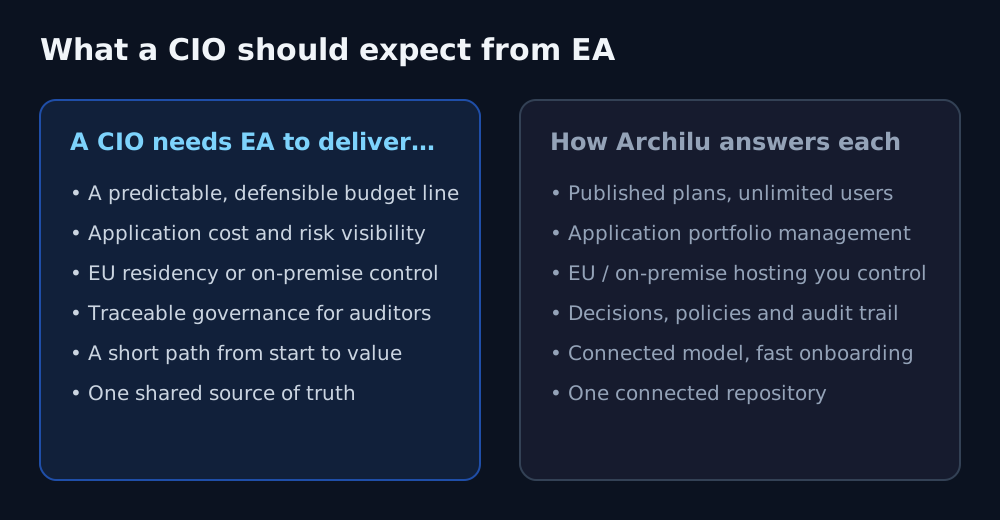
Weil EA einen verstreuten Anwendungsbestand in ein verteidigbares Budget verwandelt. Sie zeigt, welche Anwendungen was kosten, welche sich überschneiden und welche Risiko tragen — sodass Sie redundante Ausgaben streichen, Ausmusterungen planen und einem CFO oder Auditor mit Belegen statt Meinung antworten können.
Wie hilft Enterprise Architecture, IT-Kosten zu kontrollieren?
Indem sie das Portfolio sichtbar macht. Application Portfolio Management legt doppelte Werkzeuge, geringwertige Systeme und alternde Technologie offen — dort entstehen Rationalisierungseinsparungen. Archilu umfasst unbegrenzte Nutzer in jedem Plan, sodass die ganze Organisation diese Portfoliodaten aktuell halten kann, ohne dass Kosten pro Platz die Akzeptanz ausbremsen.
Braucht eine EA-Plattform für einen CIO EU-Datenresidenz?
Für regulierte oder souveränitätsempfindliche Organisationen oft ja. Archilu bietet EU- oder On-Premise-Hosting unter Ihrer Kontrolle, was Datenresidenzfragen aus Risiko, Recht und Einkauf direkt beantwortet. Ob das die Breite eines etablierten Anbieters aufwiegt, hängt von Ihrem Kontext ab, und wir sind ehrlich: Größere Suiten haben mehr Referenzen.
Strategische Links
Enterprise-Architecture-Plattformen vergleichen
Verwandte Artikel
Coûts IT et risque fournisseur : une seule carte pour le budget et DORA
Coûts et risque tiers IT vivent d'habitude dans des tableurs séparés. Relier applications, fournisseurs et coûts dans un seul modèle révèle d'un coup concentration, exposition de licences et candidats à la rationalisation — et produit la preuve qu'attendent les revues pensées pour DORA.
NIS2 et architecture d'entreprise : cartographier les systèmes et dépendances que touche la gestion des risques
NIS2 élargit les entités couvertes et relève le niveau attendu en gestion du risque cyber, sécurité de la chaîne d'approvisionnement et traitement des incidents. Chacune de ces attentes repose sur une question préalable : connaissez-vous réellement vos systèmes et la façon dont ils dépendent les uns des autres ? Une cartographie EA est l'endroit naturel pour tenir cela — honnêtement, comme preuve, pas comme un badge de conformité.
CSSF et architecture d'entreprise : une seule carte pour la documentation IT, sous-traitance et résilience
Banques, PSF, entreprises d'investissement et acteurs de fonds supervisés par la CSSF portent des attentes récurrentes de documentation autour de l'IT, de la sous-traitance et de la résilience opérationnelle. Chacune repose sur une question préalable : savez-vous vraiment montrer vos capacités, applications, flux de données et les tiers derrière eux ? Un référentiel EA est l'endroit naturel pour tenir cela — honnêtement, comme preuve, pas comme un badge de conformité.