

Published on June 19, 2026 | Updated on June 19, 2026 | 9 min read
How Much Does an Enterprise Architecture Tool Cost?
An honest guide to enterprise architecture tool pricing — the models, the hidden costs, and why total cost of ownership matters more than any sticker price.
Looking for an enterprise architecture software platform? Use our EA tool evaluation guide and run the EA maturity assessment.
Key takeaways
- How to compare platforms on decision outcomes, not feature volume.
- How to reduce adoption risk with a short but rigorous pilot.
- How to link tool selection to governance and transformation cadence.
Table of contents
- Operating model deep dive
- Why this question has no simple answer
- The common pricing models
- What incumbents typically charge (and why it's an estimate)
- The user model is the biggest lever on cost
- Look at total cost of ownership, not just the license
- How to decide with confidence
- Metrics that matter
- Common mistakes
- Practical checklist
Operating model deep dive
Enterprise architecture software only creates value when it improves how decisions are made across strategy, portfolio, and delivery.
Before selecting a platform, define who makes which architecture decisions, what evidence is required, and how exceptions are tracked to closure.
- Map decision workflows by role (EA, domain leads, product, security, finance)
- Define minimal evidence pack for each decision type
- Set escalation path when standards and delivery pressure conflict
Why this question has no simple answer
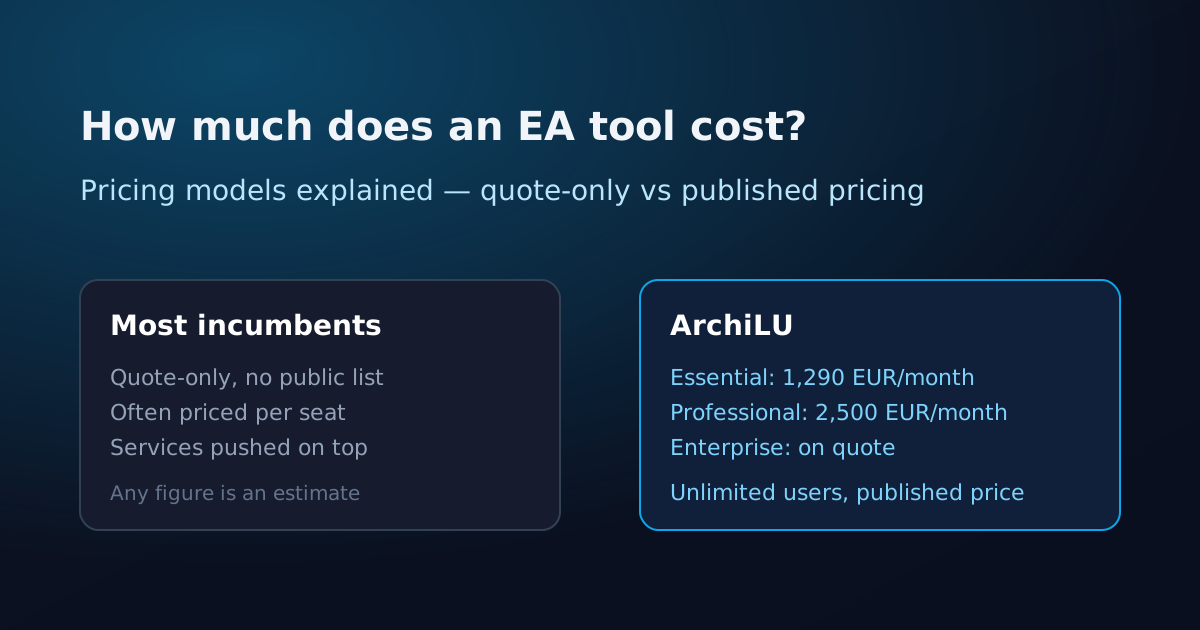
"How much does an EA tool cost?" sounds like it should have a number attached. In practice it usually does not, because most established enterprise architecture vendors do not publish a price list at all.
As the Archilu portal audit records, leading platforms are typically quote-only and frequently priced per seat. That means the figures floating around blogs and forums are third-party estimates, negotiated per deal — useful as a rough signal, but not an official rate you can budget against.
The common pricing models
EA tools cluster around a few commercial patterns. Knowing which one a vendor uses tells you a lot about how predictable your spend will be.
- Quote-only: no public list; you must contact sales to get any number (most incumbents)
- Per-seat / per-user: cost scales with how many people you license, which can punish wide rollout
- Tiered flat subscription: a published price per plan, independent of headcount
- Services-heavy: a license plus paid implementation and consulting layered on top
What incumbents typically charge (and why it's an estimate)
Because there is no public list, we will not quote competitor numbers as fact. The honest framing, consistent with the audit, is this: leading EA suites are generally sold on quote, often per seat, and sometimes with significant paid services on top. Any specific figure you encounter is an estimate, not a verifiable rate.
This is not a criticism of those vendors — bespoke pricing is a legitimate model. It simply means that, as a buyer, you cannot compare or budget until you have entered a sales process with each one.
EA tool pricing explained: why most incumbents are quote-only and per-seat, what drives total cost of ownership, and how to model your real cost before buying.
The user model is the biggest lever on cost
Of all the variables, the user model moves the bill the most. Per-seat licensing means every business owner, risk officer or architect you invite adds cost — which discourages exactly the broad participation that keeps a model useful.
Archilu includes unlimited users on every plan. That removes the per-seat penalty that can make wide adoption expensive elsewhere, and it keeps the licence line predictable as your practice grows. When you compare options, normalize on a realistic number of contributors, not just a headline rate.
Look at total cost of ownership, not just the license
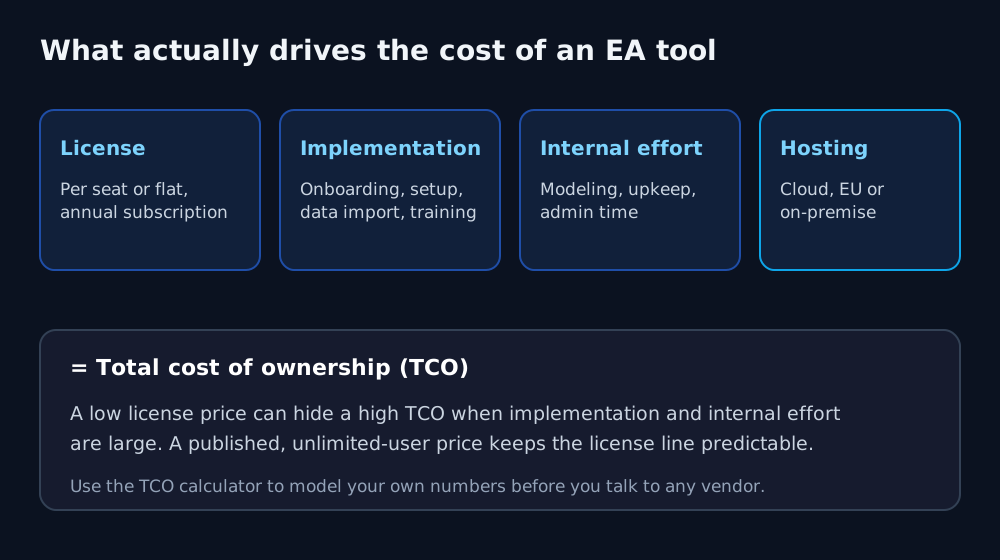
The license is only part of the bill. Total cost of ownership (TCO) also includes implementation and onboarding, the internal effort to model and maintain your data, hosting, and training. A headline license price can be misleading if the surrounding effort is heavy.
This is where a deliberate, low-friction tool earns its keep: faster time-to-value and unlimited users keep both the implementation and license lines under control. To put real numbers against your own situation, use Archilu's EA TCO calculator before you ever speak to a vendor.
How to decide with confidence
Start by modeling your TCO, then weigh it against the features you genuinely need. If unlimited users and EU sovereignty matter to you, Archilu is built for that; if you need the breadth of a large incumbent, factor the quote-and-negotiate process into your timeline.
Either way, decide on numbers you can defend. The TCO calculator gives you a concrete starting point, and a short demo will show whether the fit is real for your context.
Metrics that matter
Use KPIs that measure decision quality and adoption, not tool activity volume.
- Decision lead time by workflow
- Adoption rate by role and business domain
- Architecture exception closure rate
- Portfolio decisions supported by evidence
Common mistakes
Most software selection failures are operating model failures before they are tooling failures.
- Comparing feature lists without testing real decision workflows
- Ignoring integration and data model constraints
- No adoption plan by stakeholder group
- No migration strategy for existing repositories
Practical checklist
Run this checklist before committing to a platform contract.
- Define top 5 decision workflows and success metrics
- Run a time-boxed pilot with real portfolio data
- Score adoption risk by role and business domain
- Validate migration and integration effort before selection sign-off
EA tool pricing explained: why most incumbents are quote-only and per-seat, what drives total cost of ownership, and how to model your real cost before buying.
FAQ
How much does an enterprise architecture tool cost?
There is no single list price, because most incumbent vendors do not publish one. As the Archilu portal audit notes, leading EA platforms are typically quote-only and often priced per seat, so any figure you see online is an estimate, not an official rate. The amount you actually pay depends on your user count, the modules you license, implementation and the internal effort to maintain the data. To estimate your own total cost, use the TCO calculator rather than a single sticker price.
Why won't most EA vendors publish their prices?
Quote-only, per-seat pricing lets vendors tailor each deal to the customer's size and negotiating position. It is a legitimate commercial model, but it has a cost for buyers: you cannot budget before engaging sales, and you cannot easily compare options. We label any competitor figures as estimates because no public list exists to verify them.
What is the total cost of ownership of an EA tool?
License is only one line. Total cost of ownership also includes implementation and onboarding, internal effort to model and maintain the data, hosting, and training. A low license price can hide a high TCO when implementation and upkeep are heavy. The Archilu TCO calculator lets you model these inputs for your own context before you talk to any vendor.
What is the best first KPI after software rollout?
Track decision lead time and stakeholder adoption by role within the first 90 days.
Should procurement drive platform selection alone?
No. Procurement, architecture, and transformation leadership should evaluate together.
Strategic links
Compare enterprise architecture platforms
Related articles
IT Cost and Supplier Risk: One Map for Money and DORA
Cost and ICT third-party risk are usually managed in separate spreadsheets. Mapping applications to suppliers and cost in one model lets you see concentration, license exposure and rationalisation candidates at once — and produce the evidence DORA-minded reviews expect.
NIS2 and Enterprise Architecture: Mapping the Systems and Dependencies Risk Management Touches
NIS2 broadens the entities covered and raises the bar on cyber risk management, supply-chain security and incident handling. Each of those expectations rests on one prior question: do you actually know your systems and how they depend on each other? An EA map is the natural place to hold that — honestly, as evidence, not as a compliance badge.
CSSF and Enterprise Architecture: One Map for ICT, Outsourcing and Resilience Documentation
Banks, PFS, investment firms and fund actors supervised by the CSSF carry recurring documentation expectations around ICT, outsourcing and operational resilience. Each rests on a prior question: can you actually show your capabilities, applications, data flows and the third parties behind them? An EA repository is the natural place to hold that — honestly, as evidence, not as a compliance badge.