

Published on June 19, 2026 | Updated on June 19, 2026 | 9 min read
Archilu vs Ardoq: Time-to-Value vs a Graph-First EA Platform
An honest comparison: where Archilu's fast time-to-value and EU sovereignty win, and where Ardoq's graph depth and AI fit better.
Looking for an enterprise architecture software platform? Use our EA tool evaluation guide and run the EA maturity assessment.
Key takeaways
- How to compare platforms on decision outcomes, not feature volume.
- How to reduce adoption risk with a short but rigorous pilot.
- How to link tool selection to governance and transformation cadence.
Operating model deep dive
Enterprise architecture software only creates value when it improves how decisions are made across strategy, portfolio, and delivery.
Before selecting a platform, define who makes which architecture decisions, what evidence is required, and how exceptions are tracked to closure.
- Map decision workflows by role (EA, domain leads, product, security, finance)
- Define minimal evidence pack for each decision type
- Set escalation path when standards and delivery pressure conflict
Two credible platforms, two different bets
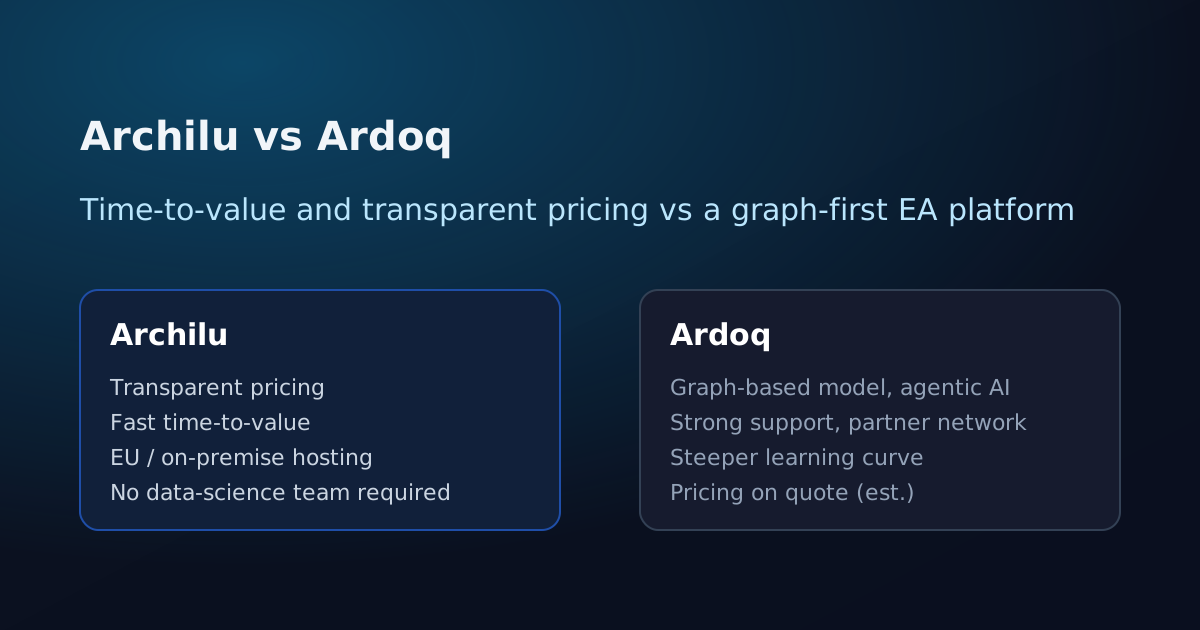
Ardoq is a well-regarded enterprise architecture platform built around a flexible graph model, with agentic AI features and a strong support and partner network.
Archilu makes a different bet: a focused model, EU sovereignty and fast time-to-value. This comparison is honest about where each one leads.
Learning curve and time-to-value
Ardoq's graph metamodel is powerful, and that power has a cost: reviewers commonly cite a steeper learning curve and the need for analysts to get the most from it.
Archilu is designed so a team can produce a usable capability map and application portfolio quickly, without standing up a modeling practice first. Unlimited users mean the whole organization can contribute without per-seat friction. If time-to-value is your constraint, that difference matters.
Where Ardoq is the stronger choice
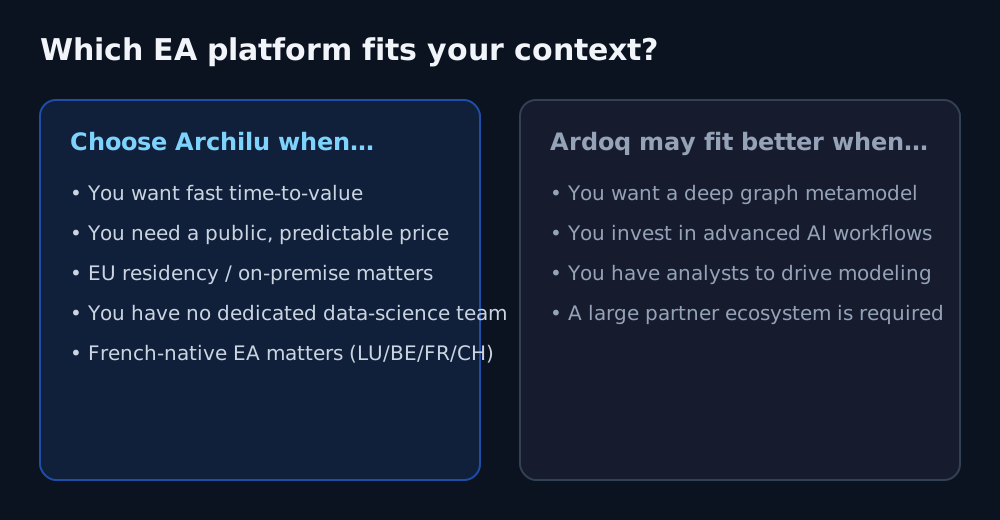
If you want a deep, flexible graph metamodel, you are investing in advanced AI-driven analysis, and you have the analysts and partner support to exploit it, Ardoq's depth is a real advantage we will not downplay.
Archilu trades some of that depth for simplicity, EU sovereignty and fast time-to-value. The guide below summarizes the fit.
Compare Archilu and Ardoq on pricing, learning curve, hosting and time-to-value — and decide which enterprise architecture platform fits.
Decide from your maturity, not a feature grid
Start from where your architecture practice actually is. Archilu's free EA Maturity Assessment scores ten dimensions and returns a prioritized plan in about ten minutes — a fast way to see which platform profile you need.
Metrics that matter
Use KPIs that measure decision quality and adoption, not tool activity volume.
- Decision lead time by workflow
- Adoption rate by role and business domain
- Architecture exception closure rate
- Portfolio decisions supported by evidence
Common mistakes
Most software selection failures are operating model failures before they are tooling failures.
- Comparing feature lists without testing real decision workflows
- Ignoring integration and data model constraints
- No adoption plan by stakeholder group
- No migration strategy for existing repositories
Practical checklist
Run this checklist before committing to a platform contract.
- Define top 5 decision workflows and success metrics
- Run a time-boxed pilot with real portfolio data
- Score adoption risk by role and business domain
- Validate migration and integration effort before selection sign-off
Compare Archilu and Ardoq on pricing, learning curve, hosting and time-to-value — and decide which enterprise architecture platform fits.
FAQ
Is Archilu easier to adopt than Ardoq?
For teams without a dedicated data-science or modeling function, often yes. Ardoq is a powerful graph-based platform, but reviewers frequently note a steeper learning curve. Archilu prioritizes fast time-to-value with a focused model and unlimited users, so the whole team can contribute without friction.
When is Ardoq the better choice?
If you want a deep, flexible graph metamodel, invest in advanced AI-driven analysis, and have analysts to drive modeling and a large partner ecosystem, Ardoq's depth is a genuine strength.
What is the best first KPI after software rollout?
Track decision lead time and stakeholder adoption by role within the first 90 days.
Should procurement drive platform selection alone?
No. Procurement, architecture, and transformation leadership should evaluate together.
Strategic links
Compare enterprise architecture platforms
Related articles
IT Cost and Supplier Risk: One Map for Money and DORA
Cost and ICT third-party risk are usually managed in separate spreadsheets. Mapping applications to suppliers and cost in one model lets you see concentration, license exposure and rationalisation candidates at once — and produce the evidence DORA-minded reviews expect.
NIS2 and Enterprise Architecture: Mapping the Systems and Dependencies Risk Management Touches
NIS2 broadens the entities covered and raises the bar on cyber risk management, supply-chain security and incident handling. Each of those expectations rests on one prior question: do you actually know your systems and how they depend on each other? An EA map is the natural place to hold that — honestly, as evidence, not as a compliance badge.
CSSF and Enterprise Architecture: One Map for ICT, Outsourcing and Resilience Documentation
Banks, PFS, investment firms and fund actors supervised by the CSSF carry recurring documentation expectations around ICT, outsourcing and operational resilience. Each rests on a prior question: can you actually show your capabilities, applications, data flows and the third parties behind them? An EA repository is the natural place to hold that — honestly, as evidence, not as a compliance badge.